Specification
Technical data for Ferrous Sulfate | CAS 7720-78-7 (FeSO4). Values are typical production data; the batch certificate of analysis governs each shipment.
| Model | FeSO4 |
|---|---|
| CAS No. | 7720-78-7 (heptahydrate) |
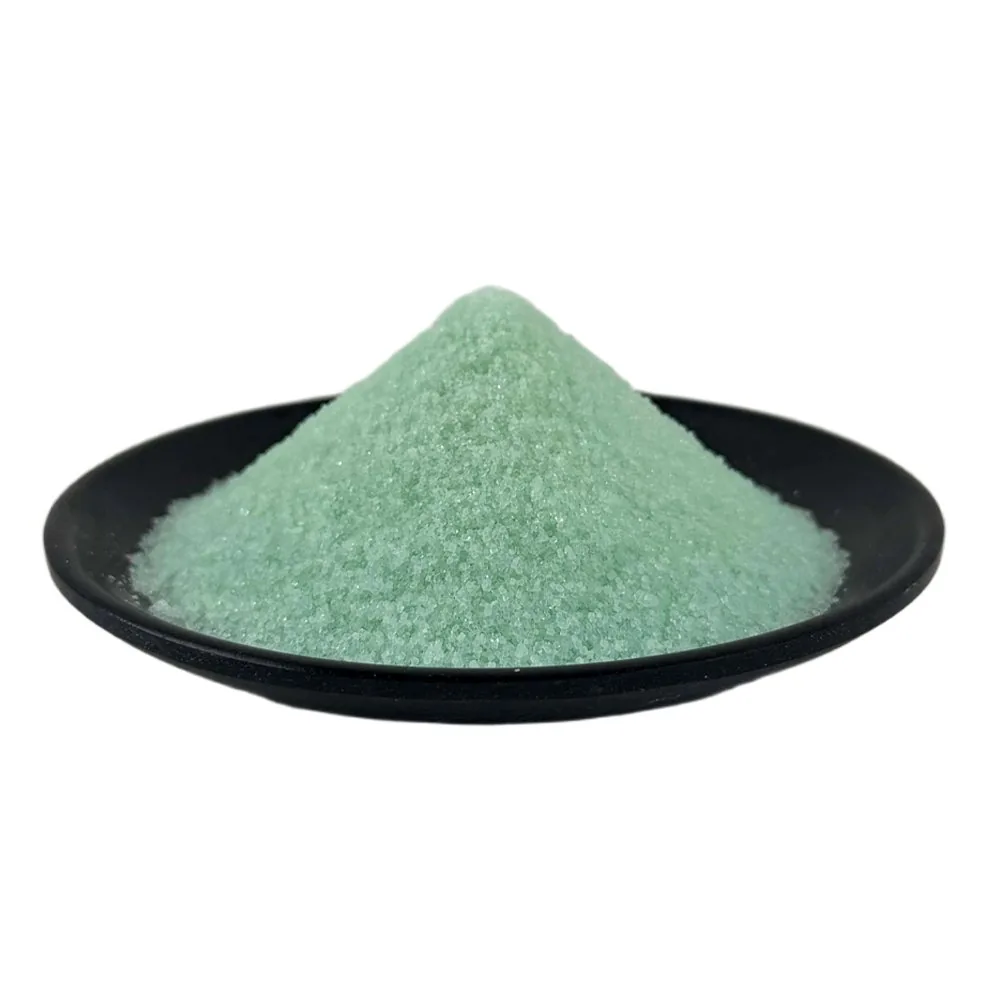
| Appearance | Pale green crystalline solid |
| Active content | FeSO4.7H2O >= 98%, Fe >= 19.7% |
| pH | 2.0-3.5 (5% aqueous solution) |
| Density / Viscosity | Bulk density 1.0-1.2 g/cm3 |
| Solubility | Highly soluble; dissolves in 10-15 min |
| Recommended dosage | 20-300 mg/L depending on chromate or phosphate load |
| Packaging | 25 kg or 50 kg PP woven bag with PE liner |
| Shelf life | 12 months, keep sealed and dry to limit oxidation |
| Product category | Wastewater Treatment Chemicals |
Typical Applications
Hexavalent chromium reduction in electroplating effluent
Phosphate precipitation in municipal and industrial plants
Dyeing and printing wastewater decolourisation
Sludge conditioning and odour control in gravity thickeners
Product Description
Ferrous Sulfate (FeSO4) at a glance
Ferrous sulfate heptahydrate for chromate reduction, phosphate precipitation and colour removal.
Ferrous Sulfate is supplied as pale green crystalline solid with feso4.7h2o >= 98%, fe >= 19.7%. In service it is dosed at 20-300 mg/L depending on chromate or phosphate load, and it is normally applied where hexavalent chromium reduction in electroplating effluent.
Where FeSO4 is used
- Hexavalent chromium reduction in electroplating effluent
- Phosphate precipitation in municipal and industrial plants
- Dyeing and printing wastewater decolourisation
- Sludge conditioning and odour control in gravity thickeners
Why formulators select FeSO4
- Dual function as reductant and coagulant in one product
- Low cost per tonne of COD and phosphate removed
- Converts soluble Cr(VI) to the precipitable Cr(III) form
- Readily available and easy to store as a dry solid
Handling, packaging and storage
FeSO4 is packed as 25 kg or 50 kg PP woven bag with PE liner. Store it sealed and frost-free; the shelf life is 12 months, keep sealed and dry to limit oxidation. Prepare working solutions in clean water at the dilution given in the specification table, and never blend it with strongly oxidising or strongly alkaline products in the same tank without checking compatibility first.
Ordering and technical support
Send us your water analysis, target limit and monthly consumption and we will confirm the FeSO4 dose, the dosing point and the packaging size for your container. A technical data sheet, batch certificate of analysis and a sample for jar testing are available on request.
Advantages
Dual function as reductant and coagulant in one product
Low cost per tonne of COD and phosphate removed
Converts soluble Cr(VI) to the precipitable Cr(III) form
Readily available and easy to store as a dry solid
Custom Options
FAQ
How much FeSO4 is needed to reduce Cr(VI)?
Stoichiometrically about 16 parts FeSO4.7H2O per part Cr(VI), but real effluent needs 1.5-2.5 times the theoretical dose to reach the discharge limit. Control the reaction at pH 2-3, then raise pH to 8-9 to precipitate chromium hydroxide.
Why does my FeSO4 turn yellow or clump?
The heptahydrate oxidises in humid air and forms basic ferric sulfate. Keep bags sealed on pallets, use stock within 12 months and avoid storing in damp warehouses.
What documentation comes with Ferrous Sulfate?
Every shipment includes a technical data sheet and a batch certificate of analysis. A free sample with the current COA can be sent for laboratory or jar testing before you place the order.
What is the minimum order and lead time?
One 20ft container load is the standard minimum, and LCL or mixed container loading is accepted for trial orders. Stock grades ship in 7-15 days; custom blends and private label orders take 20-30 days.