
Why plants move from alum to PAC
Aluminium sulphate works, but it consumes alkalinity, produces more sludge and leaves a narrower effective pH window. Polyaluminium chloride is pre-hydrolysed, so it coagulates across a wider pH range, forms larger flocs and reduces the alkalinity demand on the plant. For a municipal works that is already short of lime, the saving in pH correction often pays for the difference in unit price.
What the specification should say
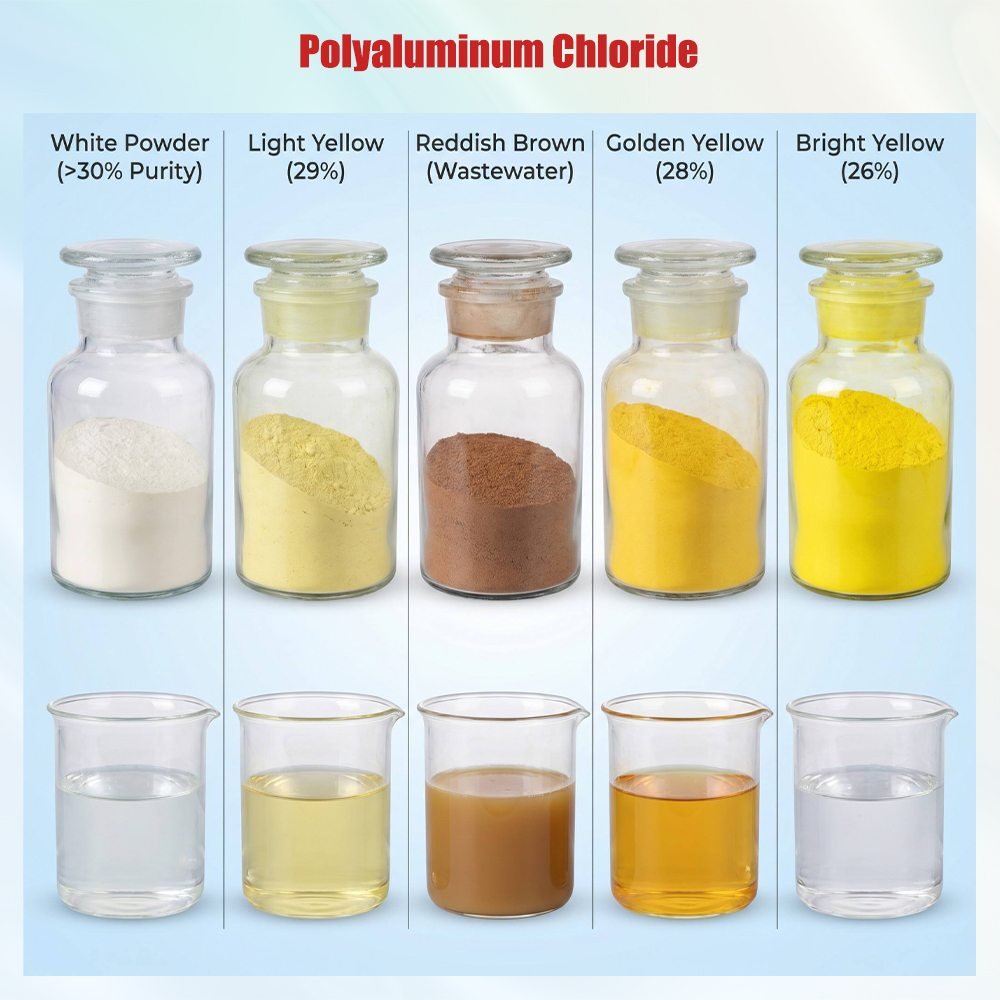
For drinking water the figures that matter are Al2O3 content, basicity, water-insoluble matter and heavy metal limits. A 30% Al2O3 powder with 40–90% basicity covers most surface water sources; liquid grades at 10–12% Al2O3 are easier to dose but carry more freight. Insoluble matter should stay low so filter runs are not shortened, and the batch COA should show the heavy metal results against the drinking water limit of your market.
Dosage and jar test
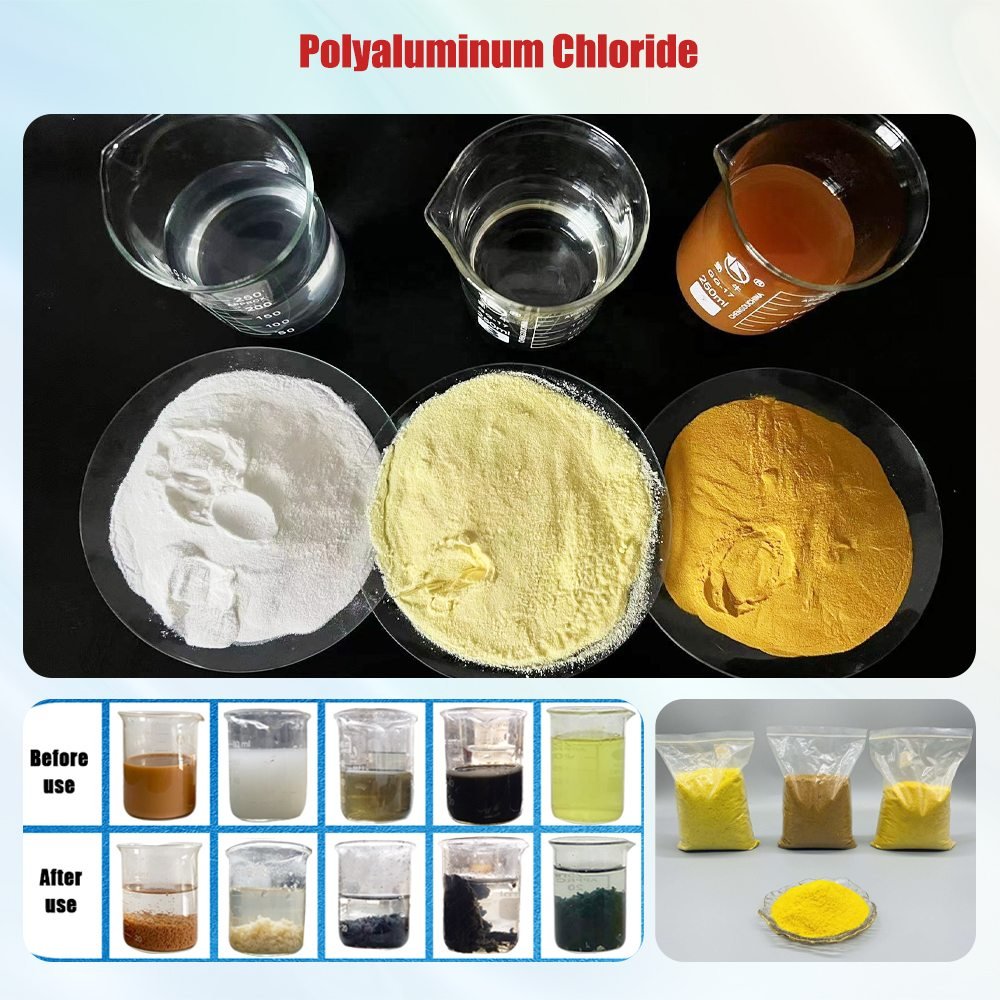
Typical doses fall between 10 and 50 mg/L as product, depending on raw water turbidity and colour. Run a jar test at six doses across the plant pH, and record settled turbidity, floc size and the residual aluminium after filtration. Where the source water changes seasonally, qualify two doses and switch with turbidity rather than waiting for a filter breakthrough.
Documents and packing
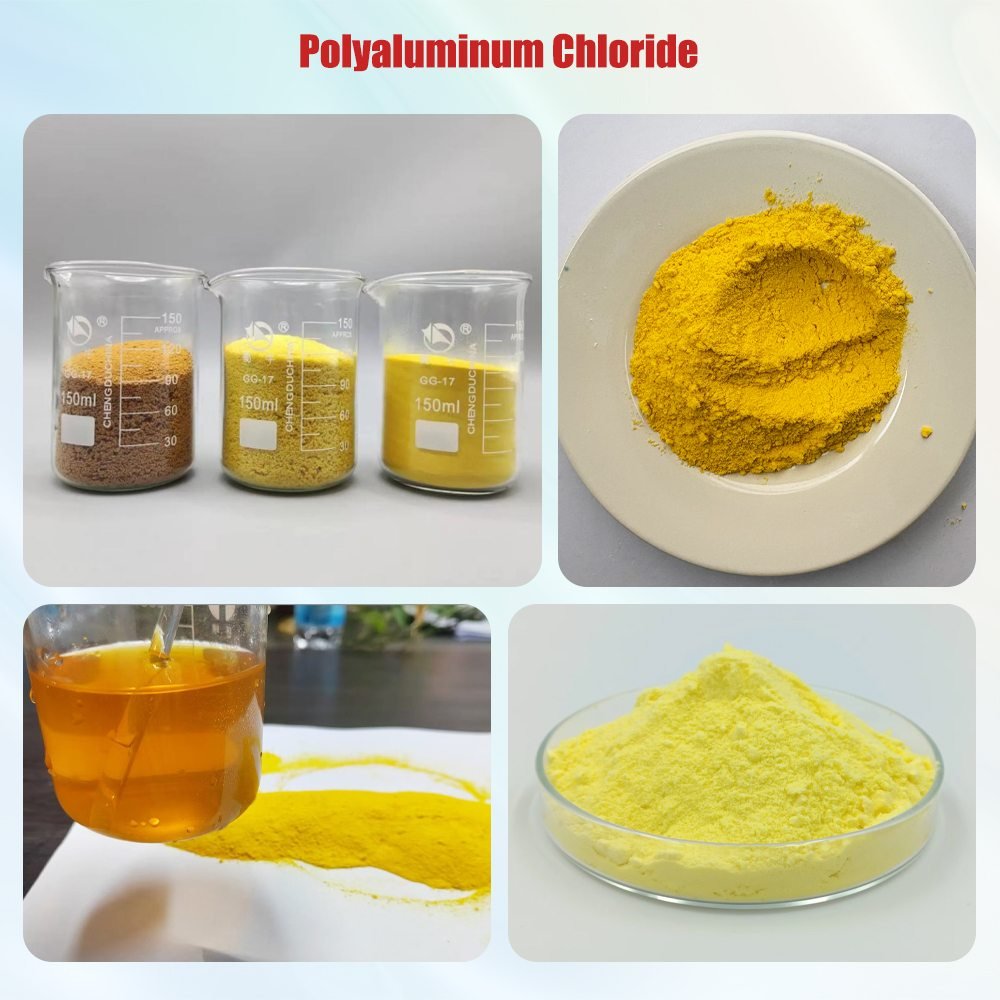
COA per batch, TDS, SDS and a heavy metal declaration are issued with every shipment. Powder is packed in 25 kg bags or 750 kg jumbo bags; liquid in 1000 kg IBC tanks or road tankers. Free samples with the current COA can be sent for your own laboratory before the first order.
